What Is Proforma Gross Rent Multiplier? Projected Rent vs Actual GRM
Proforma gross rent multiplier uses projected rent, actual GRM uses in-place leases. See which gross rental income belongs in the formula, and the spread.
By the GRMCalculator.com team
A proforma gross rent multiplier uses the rent a seller expects to collect. An actual gross rent multiplier uses the rent the leases collect today. Same price, same formula, two different answers. Listing sheets quote the proforma version far more often than they say so, and the gross rental income line is where the difference hides. Both versions rest on the same multiple that compares price to rent. The only thing that changes is which rent number you put underneath.

The three rent numbers on a listing sheet
Most offering sheets carry three rent figures and label none of them clearly.
- In-place rent. What the signed leases collect right now.
- Scheduled gross income. Every unit rented at its stated rent for twelve months, with nothing empty.
- Projected rent, usually called proforma. What the seller believes the units would bring after some change.
Price divided by annual rent is the whole of how you calculate GRM, so swapping one rent figure for another moves the answer without anything changing about the building. The formula guide covers the annual and monthly versions of the math. The question here is only which rent belongs on the bottom.
In-place rent: what the leases actually collect
In-place rent comes off the rent roll, one line per unit, with a lease behind each line. It already carries every discount the last tenant negotiated, every unit a relative lives in cheap, and every rent that has not been raised in three years.

This is the conservative number, and it is the one to run first. A $500,000 rental renting for $4,000 a month collects $48,000 a year, which is a GRM of about 10.4. Nothing in that figure depends on anyone’s forecast. If you buy the property tomorrow and change nothing, that is the multiple you paid.
Scheduled gross income and the PGI formula
Scheduled gross income, also called potential gross income, assumes full occupancy for a full year. The PGI formula is simple: rent per unit times the number of units times twelve, plus other income such as parking, laundry, storage or pet fees. It is the top line of the income statement and the starting point for gross income in any rental analysis.
Scheduled rent is not dishonest. It is a standard way to state capacity. The problem is the vacancy you never see on the sheet. Subtract vacancy and credit loss from PGI and you get effective gross income, which is the money that actually arrives. If you assume 5% vacancy on $50,000 of scheduled rent, you are really working with $47,500.
Projected rent and who wrote the projection
Projected rent is a forecast, and forecasts have authors. Ask who wrote this one and what it assumes. Common assumptions include raising every below-market lease at renewal, renting a vacant unit within a month, adding a fee the building does not charge yet, or finishing a renovation that has not started.
Some of those are reasonable. A unit $150 under market in a tight submarket probably does catch up. Others are a wish. A renovation premium assumes the money gets spent, the work gets done and tenants pay for it. The seller gets credit for all three today, in the price, without doing any of it.
Loss to lease: the gap between asking and collected
Loss to lease is the difference between what a unit could rent for at market and what the current lease actually collects. A unit worth $1,100 leased at $1,000 carries $100 a month of loss to lease. Gain to lease is the opposite case, where the in-place rent sits above today’s market, which happens after a strong leasing season or when a market softens.
Loss to lease is normal in any building with staggered leases, because rents reset only when a lease rolls. Whether it closes depends on the market and on local rules. In a place with rent control or a cap on increases, part of that gap may never close for a sitting tenant.
Running both versions and reading the spread
Run the property twice and put the two multiples side by side.
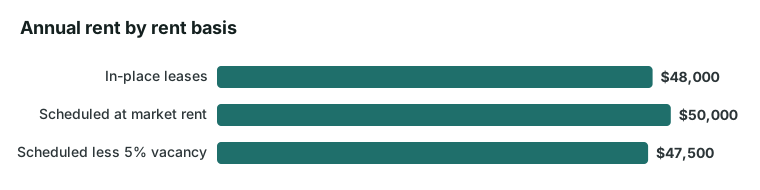
| Rent used | Annual rent | GRM at $500,000 |
|---|---|---|
| In-place leases | $48,000 | 10.4 |
| Scheduled at market rent | $50,000 | 10.0 |
| Scheduled less 5% vacancy | $47,500 | 10.5 |
That spread is small, about four tenths of a point, and it tells you the asking price is close to what the property earns today. The scheduled version of this property matches the simple tab exactly: $500,000 on $50,000 of annual rent is a GRM of 10.
A wide spread is the signal worth chasing. If a seller quotes a 9 and the leases say 12, three points of value sit in rent increases that have not happened. Compare both numbers against your market median, not against each other. When you are sorting a list of listings, use the in-place figure for every property so the ranking stays honest, then flag the wide spreads for a second look.
A quick checklist before you trust a seller’s rent roll
- Ask for the leases, not a summary. Dates, amounts, and who signed.
- Check the move-in dates. Three leases signed last month can mean concessions you cannot see.
- Count concessions. One month free on a twelve month lease cuts the real rent by about 8%.
- Separate other income from rent. Laundry and parking belong in gross income, but they are less reliable than rent.
- Ask about units occupied by the owner, family or staff.
- Confirm which units are vacant today and how long they have been empty.
None of this covers taxes, insurance, dues or repairs, which sit outside the formula entirely. Verify the rent first, then build the expense side.
Run both numbers
The fastest way through this is to run the same property twice. Enter the price and the in-place annual rent in the GRM Calculator on the home page, note the multiple, then enter the projected rent and note the second one. The gap between the two answers is the part of the price you would be paying on faith.
Frequently asked questions
What is a proforma gross rent multiplier?
A proforma gross rent multiplier is the price divided by projected annual rent instead of the rent the signed leases collect. The projection usually assumes full occupancy at market rent, sometimes after repairs or a turnover. Because the rent figure is larger, the proforma multiple always looks lower, which makes the property look cheaper per dollar of rent than it is today.
What is scheduled gross income and what is the PGI formula?
Scheduled gross income, also called potential gross income, is every unit rented for twelve full months with no vacancy. The PGI formula is rent per unit times the number of units times twelve, plus other income such as parking, laundry or pet fees. Subtract vacancy and credit loss from PGI and you get effective gross income, which is what actually lands in the account.
What is gain or loss to lease?
Loss to lease is the gap between what a unit could rent for at market and what the current lease collects. A unit worth $1,100 that is leased at $1,000 carries $100 a month of loss to lease. Gain to lease is the reverse, where the in-place rent sits above market, often after a hot leasing season. Both close as leases roll.
Which rent should you use in the GRM formula?
Use in-place rent from the signed leases for your own screen, because that is the money the property collects now. Run the proforma version second as a separate number and label it. If the two multiples sit far apart, the difference is the seller asking you to pay today for rent increases you have not earned.